September 3, 2026
Rock excavation is one of the most demanding tasks in the construction and land development world. While digging through soil is relatively straightforward, encountering rock beneath the surface changes the entire scope, timeline, and cost of a project. Whether it's a residential build, a commercial development, or a utility installation, rock excavation requires specialized equipment, technical know-how, and a deep understanding of local geology. For property owners and developers in Southwest Missouri and Northwest Arkansas, where limestone and other rock formations are common just beneath the topsoil, this reality is especially important to plan for.
Trying to tackle rock excavation without professional support often leads to delays, safety hazards, and budget overruns. That's why so many property owners turn to an experienced excavating company rather than attempting the work themselves or hiring a crew without the right expertise. In this post, we'll explore the biggest challenges rock excavation presents and the professional solutions that make these projects successful.
Understanding Why Rock Excavation Is So Complex
Unlike excavating through soil or clay, rock excavation involves breaking apart dense, often unpredictable material that doesn't respond to standard digging equipment. Rock formations vary in hardness, density, and composition, meaning a technique that works on one site may be completely ineffective on another. Some rock can be ripped apart with heavy machinery, while other formations require blasting, hydraulic hammering, or specialized rock-splitting tools to break through.
This complexity is exactly why hiring an experienced excavating company matters so much. A qualified team can assess the rock type on-site, determine the most efficient removal method, and adjust their approach as conditions change. Without this expertise, projects can stall for days or weeks while crews figure out how to proceed, driving up costs and pushing back completion dates.
Recognizing the Safety Risks Involved in Rock Removal
Safety is one of the most pressing concerns in any excavation project, and rock excavation raises the stakes even further. Heavy equipment operating near unstable rock faces, the risk of falling debris, and the potential for cave-ins all create serious hazards for workers and nearby structures. Trenching adds another layer of risk, since exposed trench walls can shift or collapse without warning.
According to OSHA, trenches measuring five feet or deeper generally require a protective system in place, unless the trench has been cut entirely through solid, stable rock. This requirement highlights just how seriously safety regulators treat excavation depth and soil conditions, and it underscores why professional oversight is non-negotiable. A trained excavating company understands these standards inside and out and knows how to implement shoring, sloping, or other protective systems when conditions call for them. Attempting rock excavation without this knowledge doesn't just risk project delays; it risks lives.
Managing Equipment Demands for Rock Excavation Projects
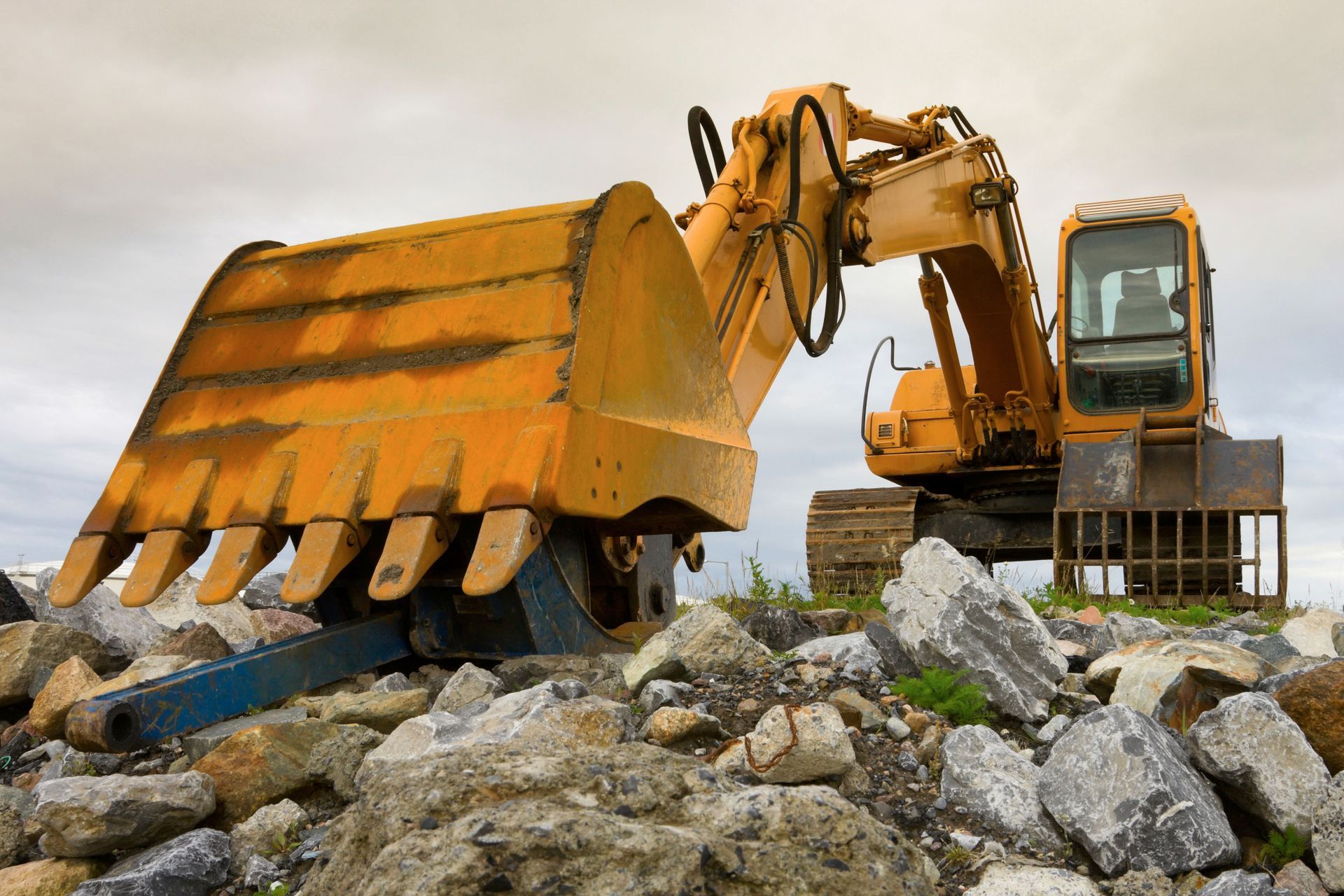
Standard excavation equipment simply isn't built to handle solid rock. Projects involving rock removal often call for specialized attachments like hydraulic breakers, rock saws, or ripper teeth, along with heavier-duty excavators capable of applying the force needed to fracture dense material. In some cases, controlled blasting may even be necessary to break apart particularly stubborn rock formations before excavation can continue.
This is another area where working with a professional excavating company pays off. Rather than renting equipment and hoping it's sufficient, an established contractor already owns or has access to the right machinery for the job. They also know how to match equipment to specific rock conditions, which prevents wasted time, unnecessary equipment strain, and costly breakdowns mid-project. For property owners, this translates directly into a smoother, more predictable project timeline.
Addressing Unpredictable Ground Conditions Beneath the Surface
One of the biggest challenges in rock excavation is that you often can't fully predict what's beneath the surface until digging begins. A site might show signs of soft soil in some areas and solid bedrock just a few feet away. This unpredictability can throw off timelines and budgets if a project isn't planned with contingencies in mind.
Experienced professionals mitigate this risk by conducting thorough site assessments before major excavation work begins. Soil borings, geological surveys, and knowledge of regional rock formations all help an excavating company anticipate what they're likely to encounter. While surprises can still happen, a seasoned team is far better equipped to adapt quickly, adjust their approach, and keep the project moving forward without major setbacks.
Handling and Repurposing Excavated Rock Material
Once rock has been broken apart and removed, project managers face another decision: what to do with all that material. Hauling it off-site can be expensive and time-consuming, especially for large volumes. In many cases, however, excavated rock can be crushed, screened, and repurposed as base material, gravel, or aggregate for the very project it came from, or for future use elsewhere.
This is where working with an excavating company that also offers crushing, screening, and material supply services becomes a major advantage. Rather than paying to remove rock and then paying again to purchase aggregate materials, property owners can have excavated rock processed on-site and reused, cutting down on both cost and environmental impact. This kind of full-service capability is something that sets established contractors apart from smaller operations that only handle one part of the process.
Coordinating Utility Installation Around Rock Formations
Rock excavation rarely happens in isolation. In many projects, it's directly tied to installing sewer lines, water systems, electrical conduits, or other essential infrastructure. Digging trenches for utilities through rocky ground adds significant difficulty, since these trenches often need to meet precise depth and slope requirements while also navigating dense material.
A qualified excavating company brings the coordination skills necessary to manage rock removal and utility installation simultaneously. This means fewer delays, less risk of damaging newly installed lines, and a more efficient overall workflow. Property owners benefit from having one team handle both the rock excavation and the utility work, rather than juggling multiple contractors who may not communicate effectively with one another.
Planning Realistic Timelines and Budgets for Rock Excavation
Perhaps the most underestimated challenge in rock excavation is planning. Because rock removal is inherently unpredictable, projects that don't account for potential complications often run over budget and past deadline. Property owners sometimes assume rock excavation will proceed at the same pace as standard soil excavation, only to be caught off guard when timelines stretch and costs climb.
An experienced excavating company helps set realistic expectations from the outset. By evaluating site conditions, rock type, and project scope upfront, professionals can provide more accurate estimates and build in reasonable contingencies for the unexpected. This proactive planning approach protects property owners from unpleasant surprises and keeps projects on track, even when the ground beneath the surface doesn't cooperate.
Rock excavation is rarely simple, but with the right expertise, it doesn't have to derail your project. From understanding rock composition and managing safety risks to selecting the right equipment and coordinating utility work, successful rock excavation depends on experience, planning, and specialized resources that most property owners simply don't have on hand. Attempting this kind of work without professional guidance often leads to unnecessary delays, safety concerns, and added expenses that could have been avoided from the start.
If you're facing a project that involves rock excavation, don't leave it to chance. We at Flat Creek Excavating LLC bring over 15 years of hands-on experience handling rock removal, grading, utility installation, and material processing throughout Southwest Missouri and Northwest Arkansas. Contact us today for a free estimate, and let our team give your project the solid foundation it deserves.